
Contents
Compare Top 10 Inversion Tables For 2024
Name & Model | Image | Max User Weight | FDA Approved | Rating | More Info |
FitSpine LX9 |   | 300 lbs | Yes + UL Safety Certified | ||
Innova ITX 9600 |   | 300 lbs | No | ||
Innova ITX 9900 |   | 300 lbs | No | ||
IronMan Gravity 4000 - Currently unavailable. |   | 350 lbs | No | ||
IronMan Gravity 5000 - Currently unavailable. |   | 350 lbs | No | ||
Ironman Essex 990 - Currently unavailable. |   | 275 lbs | No | ||
Body Vision IT 9825 - Currently unavailable. |   | 250 lbs | No | ||
Body Vision IT 9550 - Temporarily out of stock. |   | 250 lbs | No | ||
Health Gear ITM 5500 |   | 300 lbs | No | ||
Innova ITM 5900 - Temporarily out of stock. |   | 300 lbs | No |
FitSpine LX9 Inversion Table Overview
Target back pain at the source in just a few minutes a day in your own home. The Teeter FitSpine LX9 includes value-added accessories to elevate your Teeter experience. The teeter difference is our promise to provide a superior product.
Built with the best materials, like heat treated and high gauged steel. And backed by third-party quality certification by UL, the world’s leading consumer safety product testing organization.
Teeter makes the only inversion table on the market, FDA-registered as a Class 1 medical device.
The Teeter is indicated for:
- Back pain
- Muscle tension
- Sciatica
- Herniated discs
- Spinal degenerative joint disease
- Degenerative disc disease
- Spinal curvature due to tight muscles
- Spinal stenosis
- Facet syndrome
- Muscle spasms
- And more…
With the LX9, assembly is frustration-free. All major components come preassembled. Plus, you’ll have all the help you need with the included “Getting Started” DVD, free 3D instructional built app, and US-based customer support.
Rated up to 300 pounds, the LX 9 easily adjusts for users between 4’8″ and 6’6″ and is built for the benefits, with features designed to enhance your comfort and security.
Using the Teeter is as easy as 1-2-3. Just set it, lock it, recline and relax. Teeter “Precision Balancing” gives you complete control over your rotation. Preset your inversion angle with the adjustable easy angle tether.
Embroidered color-coded angle markers at 20, 40, and 60 degrees, make it easy to slide the buckle to your desired setting. The boarding platform with an arched frame makes mounting and dismounting easier than ever. The “Deluxe EZ-Reach” ankle system features an extended micro jousting handle, which reduces the need to bend when securing the ankles.
The ankle comfort dial and ERGO-EMBRACE SUPPORT reflect years of design innovation to achieve our most comfortable fit yet. Large STRETCH MAX HANDLES, with an extra-long grip, offer assistance while inverting.
EZ-STRETCH TRACTION HANDLES allow you to find different stretches and add more decompression options. The LX9 also features a storage caddy, for conveniently storing your water bottle, phone, or accessory. The unique and patented flex tech bed features an ergonomic shape and an eight-point suspension system. The moveable rib supports flex with you, for a greater range of motion. And the decompression surface allows for maximum body slide for better results.
The table bed also accommodates the included accessories. Place the acupressure nodes wherever you need them, for varied intensity and customized pressure point relief. to help ease tension and muscle discomfort. The lumbar bridge adds targeted decompression for the lower back and enhanced alignment benefit.
Recline in “Partial inversion” for a relaxed decompression experience, or “Advanced“, to lockout at 90 degrees, for more range of motion and inverted exercise. When you’re done, simply bring your arms to your sides, to slowly return upright. Push down on the button of the “Deluxe EZ-Reach” handle and comfortably dismount.
For those with limited space, the LX9 easily folds in seconds, for compact storage. The “Getting Started” DVD also includes 7 bonus “Healthy Back and Body” routines, that will help you target specific trouble areas, and integrate stretching and strengthening into your day. Now it’s your turn to experience the relief from back pain you deserve, in comfort and in your own home.
Feel better. Move better. Live better. With Teeter®.
FitSpine X3 Inversion Table Overview
Target back pain at the source, in just a few minutes a day, in your own home. The Teeter FitSpine X3 includes value-added accessories to elevate your Teeter experience. The Teeter difference is our promise to provide a superior product, built with the best materials, like heat-treated, high gauge steel.
And backed by third-party quality certification by UL, the world’s leading consumer safety product testing organization. Teeter makes the only inversion table on the market FDA-registered as a class 1 medical device. The Teeter is indicated for back pain, muscle tension, sciatica, herniated discs,
and more.
With the X3, assembly is frustration-free. All major components come preassembled. Plus, you’ll have all the help you need with the included “Getting Started” DVD, free 3D instructional built app, and US-based customer support.
Rated up to 300 pounds, the X3 easily adjusts for users between 4’8″ and 6’6″, and is built for the benefits, with features designed to enhance your comfort and security. Using the Teeter is as easy as 1-2-3. Just set it, lock it, recline it, and relax.
Teter “Precision Balancing” gives you complete control over your rotation. Preset your inversion angle, the adjustable easy angle tether, and embroidered color-coded angle markers, at 20, 40, and 60 degrees, make it easy to slide the buckle to your desired setting.
The Deluxe “EZ-REACH ANKLE SYSTEM” features an extended micro-adjusting handle that reduces the need to bend when securing the ankles. The “ANKLE COMFORT DIAL” and “ERGO-EMBRACE SUPPORT” reflect years of design innovation, to achieve our most comfortable fit yet.
Large “STRETCH MAX HANDLES” with an extra-long grip, offer assistance while inverting. “EZ-STRETCH TRACTION HANDLES” allow you to find different stretches and add more decompression options. The unique and patented “FLEXTECH TABLE BED” features an ergonomic shape and an 8-point suspension system.
The moveable rib supports flex with yo,u for a greater range of motion. And the decompression surface allows for maximum body slide, for better results. The table bed also accommodates the included accessories.
Place the acupressure nodes wherever you need them, for varied intensity and customized pressure point relief, to help ease tension and muscle discomfort. The lumbar bridge ads targeted decompression for the lower back and enhanced alignment benefits.
Recline in “Partial Inversion” for a relaxed decompression experience, or “Advanced” to lockout at 90 degrees, for more range of motion and inverted exercise. When you’re done, simply bring your arms to your sides to slowly return upright.
Push down on the button of the Deluxe EZ-REACH HANDLE and comfortably dismount. For those with limited space, the X3 easily folds in seconds, for compact storage. The “Getting Started” DVD also includes 7 bonus “Healthy Back and Body” routines, that will help you target specific trouble areas, and integrate stretching and strengthening into your day. Now it’s your turn to experience the relief from back pain you deserve, in comfort, and in your own home.
Feel better. Move better. Live better. With Teeter®.
FitSpine X1 Inversion Table Overview
Introducing the Teeter FitSpine X1 inversion table, designed to give you more control, more comfort, and real results in your journey to back pain relief. Discover how amazing your back can feel with a state-of-the-art FitSpine flex technology bed, designed to give you more stretch, flexibility, and relief.
The smooth FLEXTECH BED encourages your spine to decompress and elongate, better than on any other inversion table surface. And the 8-POINT FLOATING SUSPENSION system moves with you, so you can flex, twist, and stretch with absolute ease. Plus, the unique tracks give you more options for enhancing your inversion experience.
Attach the bonus LUMBAR BRIDGE to help target the lower back and square misaligned hips. Place acupressure nodes anywhere on the tracks for targeted trigger point relief at four varied intensities. GRIP & STRETCH HANDHOLDS are built into the bed for more stretching and movement.
Stretch-assist handles feature a helpful angle guide, and a large grip surface. From the moment you step into the ergonomic ankle system, you’ll feel supported, comfortable and secure. The Teeter ANKLE COMFORT DIAL foot platform rotates to a high or low setting, for a customized fit, that enhances comfort and rotation control.
The spring-loaded ankle closure secures your ankles with the simple pull of the handle. ERGO-EMBRACE ankle supports are engineered to wrap comfortably around your ankles, with thick foam to evenly distribute pressure, and a hard outer shell, to prevent accidental release and ensure security.
Using the teeter is as easy as 1-2-3. Just set it, lock it, recline it, and relax. Teeter PRECISION BALANCING gives you total control with minimal effort, using simple arm movements, to shift your
body weight and return upright.
Set your desired angle of inversion with the adjustable ANGLE TETHER or remove the tether and lockout in full inversion, for advanced stretching and exercise. With the free TEETER MOVE app, you get subscription-free inversion coaching, to help you feel better and move better every day.
Access getting started tutorials, how-to videos, guided inversion sessions, and more. Rated for up to 300 pounds user capacity, with a 4-time safety factor, of up to 1200 pounds, the Teeter X1 adjusts for users between 4’8″ and 6’6″ and easily folds for compact storage. With heat-treated high gauge steel and key components, Teeter inversion tables are built to last. Unlike some brands that cut costs with low-quality materials, susceptible to fatigue.
Teeter inversion tables are safety certified by UL and outperform the competition and comparison testing for quality, endurance, and rotation control. Look for the label, the only way to verify that a product continues to meet safety standards.
Teter makes the only inversion table FDA-registered, as a Class 1 medical device. The Teeter is indicated for back pain, muscle tension, sciatica, herniated discs, and more. With Teeter, we are here to help you every step of the way. Assembly is frustration free. All major components arrive
pre-assembled, and you can follow along with 3D-guided instructions, via the built app.
So, if you’re ready to live free from back pain, experience why over 3 million people have put their trust in Teeter and how the X1 inversion table is truly built for the benefits, to deliver real, life-changing relief.
Feel better. Move better. Live better. With Teeter®.
How Does Teeter Compare to Other Brands?
CLICK HERE TO LEARN MORE!
Look for the UL Mark  You can only be sure that an inversion table is UL Certified if the mark is clearly displayed on the product itself. |  |  |
Certified to UL Safety Standards* |  |  |
FDA-Registered 510(k) Medical Device | | |
Meets Endurance Testing Requirements* | | |
Passes Strength Test for Weight Safety* | | |
Endures Rotation Test for Durability* | | |
High-Grade Heat-Treated Steel* | | |
Precision Balanced for Controlled Rotation* | | |
Locks into Full Inversion | | |
Folds Quickly for Storage | | |
Easy 5-Step Assembly | | |
*In endurance and strength tests, ALL competing models experienced a catastrophic failure resulting from torn or broken metal, falling far short of the UL standard. Only Teeter met UL’s safety requirements. Testing by Dynamark Engineering following UL 1647 safety testing specifications. Tests were conducted on a selection of widely-distributed inversion table models.
Why We Only Recommend Teeter®
 |
THE ONLY BRAND THAT IS CLASS 1 FDA REGISTERED MEDICAL DEVICE |
60-DAY MONEY BACK GUARANTEE |
PRICE MATCH PROMISE |
THE ONLY BRAND THAT IS SAFETY CERTIFIED BY UL |
40 YEARS OF QUALITY |
See Why People Trust Teeter®
“Teeter helps me lead the life I want to live – it’s given me a lot of motion back and my pain is reduced. Energy-wise, I just feel better and I’m performing physical activities better …it’s amazing.” – Bob N. Raleigh, NC
“As soon as I got on the Teeter, it was relief; It elongates your back and it just relaxes everything. I was hooked immediately.” – Kevin L. Lake Tapps, WA
“The Teeter does so much more than just provide back pain relief. It’s helped me sleep better; it’s provided better posture. It makes me want to get up and do more!” – Theresa M. South River, NJ
What Is An Inversion Table?
Inversion therapy is a technique where you are suspended upside down to stretch the spine and relieve back pain. The theory is that by reversing the force of gravity, you can decompress the spine and take pressure off the discs and nerve roots. This type of traction rehydrates the discs, which helps reduce inflammation and pain.
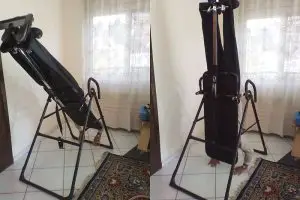 Inversion therapy is a technique where you are suspended upside down to stretch the spine and relieve back pain. The theory is that by reversing the force of gravity, you can decompress the spine and take pressure off the discs and nerve roots. This type of traction rehydrates the discs, which helps reduce inflammation and pain.
Inversion tables are devices that are designed for inversion therapy. They allow you to safely and easily hang upside down, and they come in a variety of sizes and styles to suit your needs. Inversion tables typically have a padded table or platform where you lie down, straps to secure your ankles, and a system for adjusting the angle of inversion.
These are devices designed to relieve back pain by using the force of gravity. The user is suspended upside-down from the table, allowing the spine to decompress and stretch. The goal is to reduce pain and improve blood circulation. Inversion tables are not a cure-all for back pain, but they can be a helpful tool for managing pain and improving mobility.
If you’re considering an inversion table, it’s important to check with your doctor first, especially if you have high blood pressure, glaucoma, or a history of stroke or detached retina. Inversion therapy is not recommended for pregnant women or people who have had recent surgery.
How Does It Work?
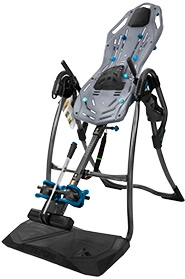 Gravity has a lot of effects on our bodies. It affects how our blood circulates, how we grow, and even how we heal. When you’re upside down, it reverses the effects of gravity on your body. This can have some pretty amazing benefits for your health!
Here’s how it works: when you’re upright, gravity pulls your blood down into your lower body. This can cause pooling in your legs and feet, which can lead to swelling, varicose veins, and other circulation problems. When you invert, gravity pulls the blood up into your upper body, which can help to improve circulation and relieve pressure on your veins.
Inversion also helps to lengthen your spine and decompress the disks between your vertebrae. When you’re upright, gravity compresses these disks, which can lead to pain and inflammation. Inverting helps to take the pressure off of these disks and can help to relieve back pain.
Inversion can also help to relieve tension headaches by lengthening the muscles in your neck and shoulders. And because it improves circulation and takes the pressure off of your spine, it can also help to relieve sciatica pain.
What Are The Benefits Of Using An Inversion Table?
The benefits of using an inversion table are many and varied, but some of the most commonly cited benefits include:
- Improved circulation
- Relief from back pain
- Decompression of the spine
- Improved posture
- Reduced stress levels
- Increased energy levels
Inversion Tables and Back Pain
If you are suffering from back pain, you may want to consider investing in an inversion table. Inversion therapy is a type of treatment where you are suspended upside down for a short period of time. This can help to relieve pressure on your spine and improve your overall circulation.
Back Pain Relief
Inversion therapy is a technique that involves hanging upside down or at an inverse angle while suspended from the ankles, knees, or hips. The goal of inversion therapy is to apply traction to the spine in order to decompress the vertebrae and take pressure off of the discs between them. Inversion therapy has been used for centuries as a treatment for back pain relief.
There are a number of different methods of inversion therapy, but the most common is using an inversion table. Inversion tables are designed to allow you to safely hang upside down or at an inverse angle for a period of time. The use of inversion tables for back pain relief is thought to be effective because it helps to stretch the spine and relieves pressure on the discs between the vertebrae.
In addition to using an inversion table, there are a number of other methods that can be used for inversion therapy. These methods include hanging from a bar or ring attached to the ceiling, using an inversion chair, or even wearing an inversion suit. No matter what method you choose, it is important that you consult with your doctor before beginning any type of inversion therapy. This is especially important if you have any pre-existing medical conditions or if you are pregnant.
Back Pain Prevention
Inversion tables are devices that allow you to suspend yourself upside down for a period of time. This can be helpful for people with back pain, as it allows the spine to stretch and decompress.
There is some evidence that inversion therapy can be helpful for people with back pain. A 2012 study found that inversion therapy may help reduce chronic low back pain. However, the study did not find that inversion therapy was more effective than other treatments, such as physical therapy.
If you’re considering using an inversion table, it’s important to talk to your doctor first. Inversion therapy is not appropriate for everyone, and it can be dangerous if you have certain medical conditions.
Other Health Benefits
Inversion therapy has been used for centuries to provide relief from back pain. An inversion table is a simple device that allows you to suspend yourself upside down for a short period of time. This can help to decompress the spine and relieve pressure on the discs and nerves. Inversion therapy can also help to improve your circulation and reduce the appearance of varicose veins.
Improved Circulation
One of the most popular health benefits of inversion therapy is improved circulation. When you hang upside down, your body is able to take the blood that has pooled in your extremities and send it back to your heart and brain. This prevents a condition known as venous pooling, which can lead to a number of health problems like varicose veins, blood clots, and restless leg syndrome.
Reduced Stress
Inversion tables are designed to help reduce stress on your spine and bones. They work by inverting your body so that your head is lower than your feet. This position takes the pressure off of your spine and allows your muscles and joints to relax. Inversion therapy has been shown to be effective in reducing back pain, improving circulation, and reducing stress levels.
Improved Flexibility
Inversion tables are devices that allow you to suspend yourself upside down, or at an inverted angle. They are commonly used for spinal traction and decompression therapy.
Inversion tables can provide many health benefits, including relief from back pain, improved flexibility, and increased blood flow to the brain. Some people also use inversion tables as a form of passive exercise or to help with weight loss.
While there is some controversy surrounding the use of inversion tables, most experts agree that they are safe for healthy adults when used as directed. Inversion therapy should not be used by pregnant women, people with heart conditions, or those with high blood pressure. If you have any health concerns, please consult your doctor before using an inversion table.
When it comes to inversion tables, there are a few things you should keep in mind before making your purchase. Here are a few tips to help you find the perfect inversion table for your needs!
Size and Weight Limitations
When you’re looking for an inversion table, the first thing to consider is your own size and weight. Every inversion table has a maximum weight capacity, which is usually between 250 and 300 pounds. If you’re taller or shorter than average, you may want to look for a specific table that will accommodate your height.
You should also make sure that the inversion table you choose has an adjustable element so that you can get a custom fit. Most inversion tables have a height range of 4 feet 6 inches to 6 feet 8 inches, but some go as low as 4 feet 2 inches and as high as 6 feet 10 inches.
Finally, check the weight specifications of the inversion table before you buy it. The heavier the table, the sturdier it will be. A heavier table is also less likely to tip over if you move too suddenly while you’re inverted.
Add-ons
There are a few extras that can be nice to have on an inversion table, but are not necessary for the therapy to be effective. If you have chronic back pain, you might want to consider a heated back support pad. This add-on provides warmth to the lumbar area and can help relax muscle spasms.
The heated mechanism is usually short-term, so it’s not recommended for long-term use. However, it can be very helpful for those who need immediate relief from back pain. Some inversion tables come with over-the-top extras like speakers or a vibrating massage feature. While these might be nice to have, they are not essential for the therapy to work.
Inversion therapy is a proven method for relieving back pain and is endorsed by many doctors. If you are looking for an inversion table, be sure to do your research and choose one that will meet your needs.
Safety
When you’re considering an inversion table, safety is paramount. You’re going to be inverting your body, after all, and putting your health in the hands of the table.
Look for these key safety features:
- A sturdy design that can support your weight without wobbling
- A comfortable padded backrest that will support your spine in the flipped position
- Non-slip rubber feet that keep the table steady on the floor
- An easy-to-use locking system that will keep you securely in place while you’re inverted
Inversion tables are not an instant cure for back pain, but they can provide real relief for many people. By decompressing the spine and increasing the space in the spinal canal, inversion therapy provides a force of gravity that can help stretch muscles and relieve pressure on nerves. If you’re considering an inversion table, look for one that offers these key safety features.
Solid, Secure Framing
An inversion table is a great way to relieve back pain and improve your overall spine health. But with so many different models on the market, it can be difficult to know which one is right for you.
Here are some things to look for when shopping for an inversion table:
- A solid, secure frame is essential. Look for an inversion table with a sturdy frame that can support a maximum user weight of 250 pounds or more.
- A foldable inversion table is a good choice if you have limited storage space. Foldable tables are also easier to transport if you plan on taking your table with you on trips or to the office.
- A self-locking system is important for safety. Make sure the inversion table you choose has a secure self-locking system that will keep you safe while inverting.
- Hinges are another important safety feature. Look for an inversion table with self-locking hinges that will prevent the table from folding up while you are inverted.
- An A-frame design is another good choice for stability and safety. A-frame tables are less likely to tip over than Other designs, and they offer extra security features like a safety belt.
Dimensions and Settings
An inversion table is a mechanical device designed to help people stretch their bodies in a controlled manner. Inversion tables are often used by physical therapists and chiropractors to help their patients relieve back pain, but they can also be used for general stretching and relaxation. When shopping for an inversion table, it is important to pay attention to the dimensions and settings of the table to make sure it will be comfortable for you to use.
The first thing to consider is the height of the inversion table. Most inversion tables are adjustable, so you can choose a height that is comfortable for you. However, if you are taller or shorter than average, you may want to look for an inversion table that is specifically designed for your height.
Another thing to consider is the ankle pads. The pads should be adjustable so that they can be positioned comfortably around your ankles. They should also be cushioned so that they do not put too much pressure on your feet or legs.
The headrest is another important feature to look for when shopping for an inversion table. The headrest should be adjustable so that you can position it in a way that is comfortable for you. It should also be well-padded so that your head is supported while you are inverted.
Finally, you will also want to consider the weight limit of the inversion table. Most inversion tables can support up to 300 pounds, but if you are heavier than this, you may want to look for a table that has a higher weight limit. In addition, if you plan on using the inversion table with another person, make sure the weight limit is high enough to accommodate both people.
Handles
Handles are an important feature to look for when choosing an inversion table. The wrap-around design provides the best level of support and stability and allows you to position yourself properly for maximum benefit.
Back Padding
When shopping for an inversion table, one of the things you’ll want to look for is back padding. This is the part of the table that will support your back while you’re in the inverted position, and it’s important to choose a table with padding that’s thick enough to be comfortable. Most inversion tables have padding that’s between two and four inches thick, but some models have even thicker padding for added comfort.
In addition to thickness, you’ll also want to look for an inversion table with removable lumbar supports. These supports can provide extra lower back support, and they’re especially helpful if you suffer from back pain. Some inversion tables even have heat pads or massagers built into the lumbar supports for added relaxation.
Why Trust Teeter
When looking for an inversion table, it’s important to find one that suits your individual needs and that you can trust. Teeter has been making inversion tables for over 40 years and is a leader in the industry. Their tables are of the highest quality and are backed by a 5-year warranty. With a Teeter table, you can feel better faster.
Teeter’s interactive 3-D instructions and patented technology make it easy to set up your table and get started. The step-by-step assembly guidance takes the guesswork out of putting your table together. And once it’s assembled, the greater stability ratio and thicker steel framing make for a more comfortable and durable inverting experience. Get the best, get a Teeter® inversion table.
